The cholupa: Huila's fruit with a protected designation of origin
A hard-shelled passion fruit, five to nine centimetres across, grown only in thirteen municipalities of Huila and protected by a designation of origin from Colombia's trade authority in December 2007. What it is, how it is eaten and how to visit a farm in Rivera.
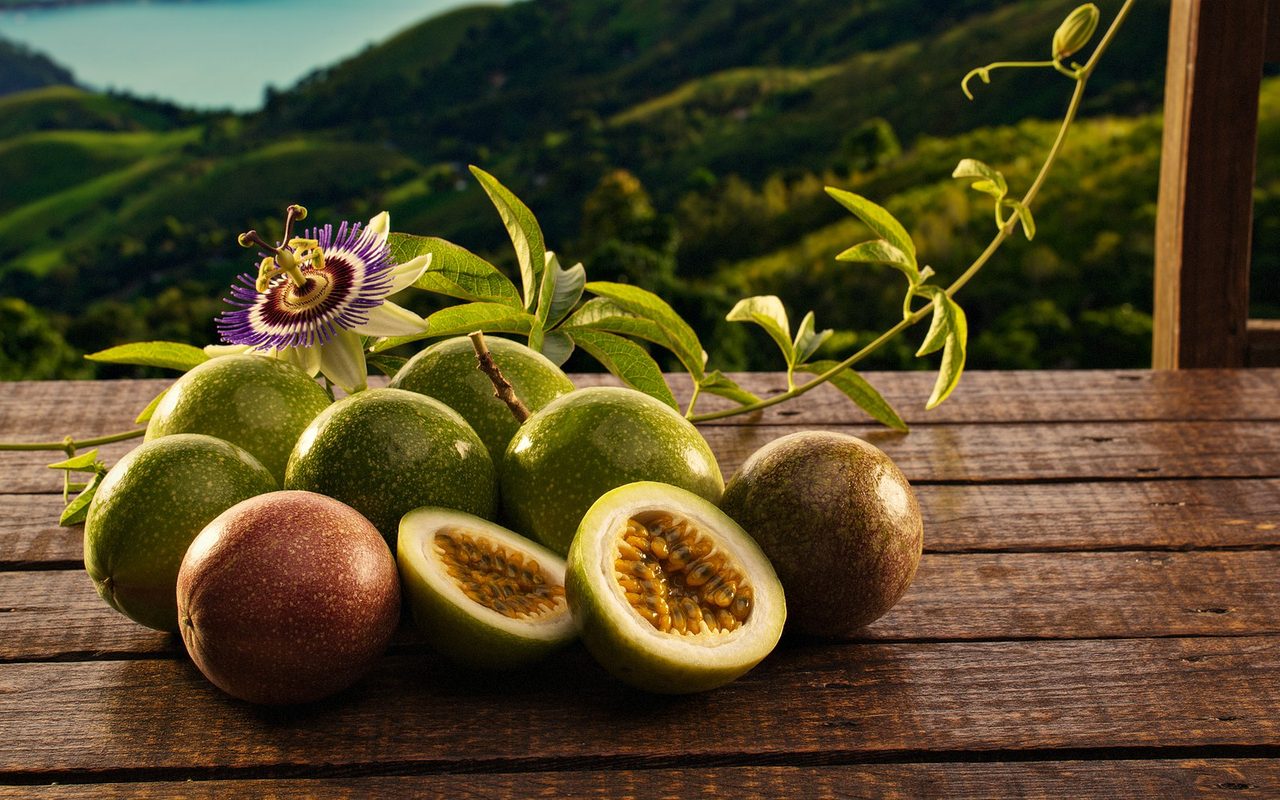
Some fruits can be found in any supermarket in the country, and others you have to go and find. The cholupa is one of the latter: a hard-shelled passion fruit that grows in a belt of thirteen municipalities in Huila and nowhere else under that protected name.
A passion fruit with a hard shell
The cholupa (Passiflora maliformis) is a cousin of the maracuyá and the granadilla, but it resembles neither. Colombia's Superintendence of Industry and Commerce describes it in its official file: a round or ovoid fruit with a leathery shell, about five to nine centimetres across and weighing between thirty and a hundred grams. Inside, numerous seeds wrapped in a viscous, transparent mucilage that gives it a sweet or acid flavour depending on ripeness.
The shell is so hard that the fruit is opened by knocking it or with a knife, and the inside is eaten with a spoon or drunk as juice. The Slow Food Foundation, which added it to its Ark of Taste, describes a soft gelatinous pulp, sweet and slightly acidic, and lists its uses: fresh, in juices and concentrates, ice creams, jams and confectionery.
A designation of origin since 2007
What turns the cholupa into a symbol of Huila is an administrative act. The Superintendence of Industry and Commerce declared protection of the designation of origin "Cholupa del Huila" by Resolution 43536 of 21 December 2007. The delimited zone covers thirteen municipalities of the department: Rivera, Palermo, Baraya, Colombia, Gigante, Neiva, Algeciras, Villavieja, Tello, Santa María, Teruel, Iquira and Campoalegre.
A designation of origin is not a trademark: it certifies that a product owes its qualities to the place where it is produced, to its climate, its soil and the knowledge of those who grow it. In Colombia the cholupa shares that distinction with very few agricultural products, which explains the pride with which it is named across the department.
Where and how it grows
Slow Food places the main production in Rivera, Gigante and Campoalegre, between 400 and 1,200 metres above sea level. Rivera, whose town centre sits at 700 metres with an average temperature of 25 °C according to the council, lies at the heart of that belt, only 20 kilometres from Neiva.
The plant is a short-cycle vine. According to Slow Food, it begins producing about seven months after planting and lives three to four years depending on how the crop is tended. One detail that surprises visitors: the cholupa is not picked. The fruit ripens, drops to the ground by itself and is collected; that is the sign it is ready. Walking under the vines and gathering the fallen fruit is the simplest and most memorable part of the visit.
A day on the Cholupa Trail
Andigena's experience is a gentle day of farm tourism in Rivera. It opens with a welcome breakfast, continues with a walk through cholupa and cacao plantings, with an explanation of the production processes, and uses the way to watch the birds that frequent these crops. At midday, a traditional lunch; in the afternoon, a tasting of cholupa and cacao products and a demonstration of cocktails made with the fruit.
It is a level 1 outing, gentle, designed for families, for anyone who does not want physical effort and for those who travel for flavour. A hat, sunscreen and water are enough: at 700 metres the heat of the valley is felt.
Why eating local matters
Buying cholupa at the farm, paying for the juice in town, ordering it at the restaurant: each gesture supports the growers who keep alive a fruit that does not travel well and is not exported in volume. The designation of origin protects the name; visitors protect the crop.
With Andigena
The "Cholupa Trail" is a one-day experience in Rivera, level 1, with breakfast, a walk through cholupa and cacao plantings, birdwatching, a traditional lunch, tasting and cocktails. Details at /experiencias/ruta-de-la-cholupa/.
With Phoenix
Andigena is the official adventure partner of Phoenix Initiative Colombia. Phoenix Oasis, a women's fitness oasis being built in Rivera, the cholupa's own municipality, has announced its opening for 30 June 2028 and takes pre-bookings with no payment; its programmes, meals included, are described at becomephoenix.com/en/retreats. Phoenix operates through two distinct legal entities, Fundación Phoenix Initiative Colombia and Fondation Phoenix Initiative France.
Sources
- Superintendencia de Industria y Comercio, "Cholupa del Huila", designations of origin, consulted 4 October 2026: https://sedeelectronica.sic.gov.co/temas/propiedad-industrial/direccion-de-signos-distintivos/denominaciones-de-origen/cholupa-del-huila
- Slow Food Foundation for Biodiversity, "Huila Cholupa", Ark of Taste, consulted 4 October 2026: https://www.fondazioneslowfood.com/en/ark-of-taste-slow-food/huila-cholupa/
- Alcaldía de Rivera, "Información del municipio", consulted 4 October 2026: https://www.rivera-huila.gov.co/MiMunicipio/Paginas/Informacion-del-Municipio.aspx
- Andigena Nature Tours 2026 portfolio, Ruta de la Cholupa sheet.
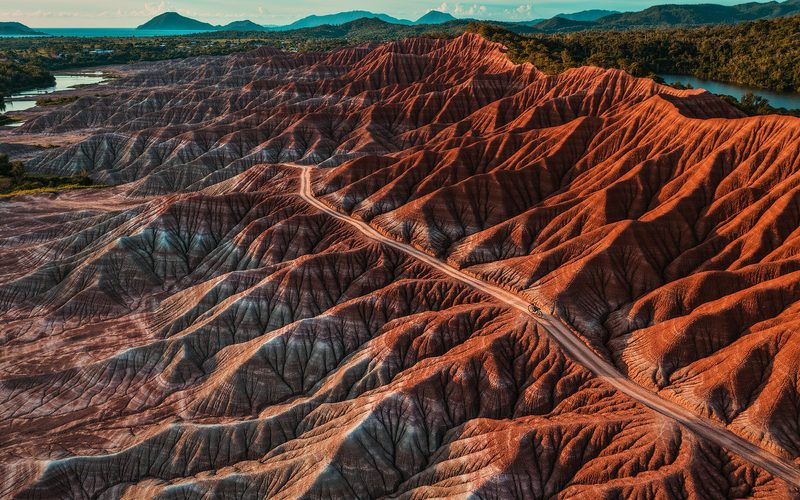
AI-generated mood image.
Sources
- https://sedeelectronica.sic.gov.co/temas/propiedad-industrial/direccion-de-signos-distintivos/denominaciones-de-origen/cholupa-del-huila
- https://www.fondazioneslowfood.com/en/ark-of-taste-slow-food/huila-cholupa/
- https://www.rivera-huila.gov.co/MiMunicipio/Paginas/Informacion-del-Municipio.aspx
- /experiencias/ruta-de-la-cholupa/
Related articles
Journal · AI image
Responsible tourism in Colombia: Law 679, communities and zero waste
What Colombian law requires of an adventure agency (Law 679 of 2001, Law 1336 of 2009, Law 2068 of 2020, NTS-TS 003), what Leave No Trace means on a trail, and how all of it translates into the way Andigena works and into the pillars of the Phoenix Foundation.
Journal · AI image
Semana Phoenix: seven days of adventure with Phoenix and Andigena
The real Semana Phoenix programme as recorded in Andigena's guide: the Tatacoa by bike, Rivera, horse riding at Finca Don Pedro, paragliding at the Mano del Gigante and rafting at Paicol, with transport and safety handled by Phoenix. No invented dates.

Journal · AI image
Adventure photography: how to come home with good pictures
Light, water, altitude and animals: practical advice for photographing canyoning, rafting, birds, whales and the Tatacoa sky, with the rules that do exist (drones in parks, distance from whales) and what Andigena includes on each outing.